
Inflammatory Breast Cancer Now Has a Diagnostic Code
By Ginny Mason | Executive Director, Inflammatory Breast Cancer Research Foundation
Inflammatory breast cancer (IBC)…most people have never heard of it, yet it’s one of the most aggressive types of breast cancer. Breast symptoms may include pain, redness, swelling, itching and ‘orange peel’ looking skin and are often mistaken for an infection. Only about one third of patients have a palpable mass or lump. IBC is more common in younger women and those of color. Self-advocacy is essential for timely diagnosis.
Since the founding of the Inflammatory Breast Cancer Research Foundation in 1999, our volunteer-led nonprofit has had two issues at the top of our agenda. One, to improve diagnosis of IBC and the second, to gain recognition of IBC as a specific disease by obtaining an ICD (International Classification of Diseases) code.
An ICD code is an integral part of a patient’s medical record and is one element used when compiling disease statistics. Without an ICD code it can be very difficult to identify IBC patients in the electronic medical record. Until recently, providers could only make a manual note identifying an IBC diagnosis. That meant many IBC patients were only listed as having stage 3 or 4 breast cancer, and were undercounted in research.
Collaboration…key to getting things done!
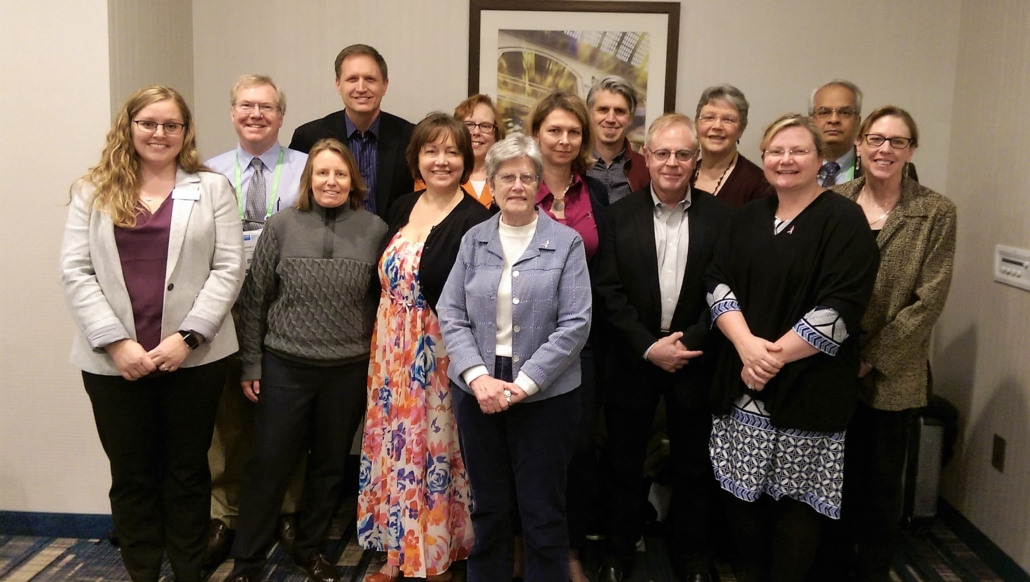
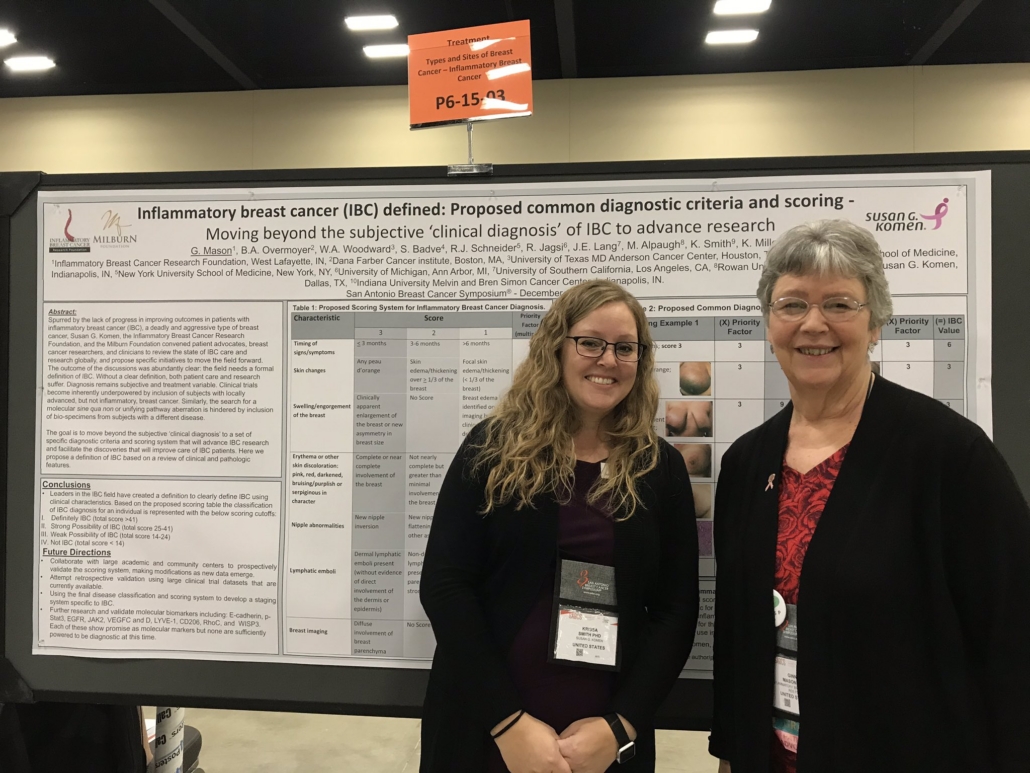
We’ve learned that collaborations can accomplish more so teamed with the Milburn Foundation and Susan G. Komen to bring together a group of clinicians, researchers, and advocates to tackle these topics. After a long day of discussions we settled on developing a diagnostic scoring system to aid healthcare professionals in the diagnosis of IBC. A white paper describing the scoring system was published then the scoring system was validated in a trial using IBC patient data. A diagnostic scoring system is now available in digital format on the Komen website for patient and healthcare provider use.
Obtaining an ICD code is a huge undertaking. Over the years our organization has worked with the Office of Rare Diseases—yes, IBC is considered a rare disease—and while they were helpful, it can be a challenge to get the attention of the WHO (World Health Organization), National Center for Health Statistics (NCHS) and the Centers for Medicare and Medicaid Services who determine the codes. This is where the power of collaboration and having dedicated staff who can help get through the bureaucracy came into play. After petitioning for IBC-specific codes, we managed to get on the coding committee’s agenda and Dr. Kathy Miller helped the committee understand the importance and need for the addition. The new codes were approved and became effective the first week of October 2025.
We thank Dr. Miller and all who have partnered with our organization over the years to help advance this major milestone for the IBC community. These new codes will benefit patients in a multitude of ways, from billing and treatment to more accurate research statistics.
ICD-10 codes for inflammatory breast cancer:
C50.A0: Malignant inflammatory neoplasm of unspecified breast
C50.A1: Malignant inflammatory neoplasm of left breast
C50.A2: Malignant inflammatory neoplasm of right breast.
Additionally, the general code for malignant inflammatory neoplasm of the breast is C50.A.