
What I Learned at MBC DART, and Why It Matters for 2026
This guest post is one of a series of reports back from patient advocates who attended cancer conferences in 2025 with the help of a travel scholarship from the MBC Alliance’s Shirley Mertz Memorial Travel Grant Program. Read the next post here.
By Martha Carlson | Individual Advocate Member & Travel Grant Recipient
In 2018, the annual Metastatic Breast Cancer Research Conference hosted by Theresa’s Research was my first exposure to scientific meetings. It was there that I began to understand the potential role of advocates—we could tell our individual stories, and we could use them to expand the vision of MBC researchers. I was in awe watching two MBC Alliance advocates, Shirley Mertz and Katherine O’Brien, offer insightful and useful information to researchers.
Earlier this year, during an interview I did with Josh Newby of Theresa’s Research, I was initially saddened to learn that the annual conference was no longer a focus. Then I learned that Theresa’s Research was taking aim at disrupting the way we look at MBC research by focusing on curative work.
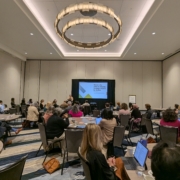
Theresa’s Research kicked off the effort in November with its inaugural Metastatic Breast Cancer: Discovery & Accelerating Research Together (MBC DART) Symposium, which brought together a small group of patient advocates, researchers from Texas and Missouri university systems, and researchers from industry. The objectives: To share ideas, stimulate conversations between all groups, and develop a plan for the future with the goal of working toward cures.
I participated in the Symposium with support from the MBC Alliance’s Shirley Mertz Memorial Travel Grant Program, which helps cover travel costs to ensure that patient voices are represented in these spaces.There were many interesting presentations and discussions, but I want to tell you about three of them because they have already impacted my 2026 advocacy plans.
- Don’t ignore the dire situation our academic institutions and researchers continue to face. This was, in fact, a missed opportunity for discussion: Aside from a private conversation with a Texas researcher, this topic was not brought up within any session I attended. Cuts in funding are significant and are likely to affect progress, including with MBC. It is not possible for nonprofits or industry to take up the slack—nonprofits are facing their own funding difficulties (especially those that focus on Black or other underserved populations) and industry is most involved in supporting research that is already ready for clinical trials, whereas breakthroughs start with basic science.
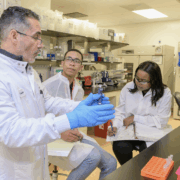
- Dr. Isaac Chan’s (UT Southwestern) presentation on gene therapy for cancer. He kicked off Session 1 with challenging words: There is no true anti-metastasis therapy; Treatments are the same for early stage breast cancer and MBC, and there’s room for improvement. Dr. Chan’s research is largely focused on liver metastasis where he is doing exciting work uncovering how cancer cells create space in the organ for tumor growth. But, for me, his call to look at MBC differently, to consider what we can do specifically for metastases and then seeing how he is doing that set the tone for the entire meeting.
- The breakout session on antibody-drug conjugates, led by Dr. Bora Lim of MD Anderson. This is a topic that I care deeply about because many friends are either on or have been on these drugs (notably Enhertu and Trodelvy), often suffering side effects that make the treatments intolerable and even dangerous. Managing these side effects and getting information on how reduced dosing, which occurs frequently with ADCs, affects drug efficacy were important parts of the discussion. I voiced my knowledge about the toxicities of these treatments and was struck by the openness and respect shown by academics and industry within the room whenever I or another patient spoke. This is far different from some other scientific meetings, and I am grateful for Theresa’s Research unwavering support in ensuring the patient voice is an integral part of every discussion.
The application period for the MBC Alliance’s Shirley Mertz Memorial Travel Grant Program is targeted to open in January, with a deadline of four to six weeks to apply. If you are a patient advocate member, watch your inbox to be notified when the program opens.