
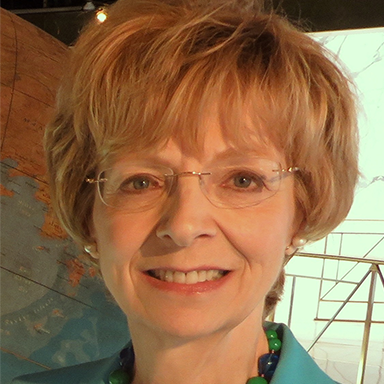
In Memoriam: Shirley Mertz, A Beloved Unifying Force in the MBC Community
The MBC Alliance celebrates the extraordinary life and legacy of Shirley Mertz, a founding member and committed champion for people living with metastatic breast cancer, who passed away in July 2025.
A two-time breast cancer survivor, Shirley’s personal experience with the disease sparked a determination to make change that has shaped the entire landscape of MBC advocacy. Diagnosed in 1991 at age 44 with early-stage ductal carcinoma in situ, Shirley made the difficult decision to undergo a bilateral mastectomy, determined to give herself the best chance at a cancer-free future. After surgery, her doctor told her she’d achieved her goal.

But twelve years later, unexplained pain in her rib cage led to the discovery of metastatic breast cancer in her spine. When initial treatment failed and the disease spread to her liver, Shirley advocated for a biopsy and learned the cancer had mutated from hormone-positive to HER2-positive. That crucial test saved her life.
It also launched her advocacy. As new treatments brought her back to “no evidence of disease,” Shirley decided to retire from her career in education, learn more about the science behind MBC, and put her speaking and writing skills to work to share her experiences and advocate on behalf of others in her shoes.
Determined to use her voice and skills to help others avoid the delays and misinformation she encountered, Shirley became a relentless force for change. She brought her intellect, compassion, and leadership to every table: educating patients, pushing for research and innovation, and working to ensure that those living with MBC were seen, heard, and understood.
The MBC Alliance literally owes its existence to Shirley. In 2012, newly appointed as President of the Metastatic Breast Cancer Network, Shirley partnered with a small group of advocates who decided they could do more together for people living with metastatic breast cancer than they could in their own separate groups. They asked pharmaceutical company Celgene to help bring the fledgling coalition together for an inaugural meeting in 2012.
“We shared why we felt our needs were unique; the idea that we’re always in treatment and we always need support, and that for years that has not been fully recognized,” Shirley later recalled. “Most large breast cancer organizations had primarily been focused on either awareness or supporting those with early-stage disease.”
In tandem with her guiding the MBC Network, Shirley collaborated to establish governance structures and secure funding and leadership to launch the MBC Alliance in 2013. As a founding member, she served for four years as Co-Chair of the Alliance’s Research Task Force: helping the organization to complete a landscape analysis on MBC, answering key questions about the epidemiology of MBC, galvanizing researchers into action, developing tools for patients to find clinical trials and raising awareness about how metastatic disease is different from early breast cancer.
She saw the founding of the Alliance as a major advance for the MBC community, and was delighted to see more organizations come into being to work toward better outcomes for those living with MBC. Elected Chair of the Alliance in 2018, she brought deep commitment to the role of accelerating patient-centered progress.
Shirley’s impact was far-reaching beyond the Alliance, too. She served as a consumer grant reviewer for the Department of Defense Breast Cancer Research Program and Susan G. Komen; chaired the Metastatic Breast Cancer Patient Advocate Subcommittee of the Translational Breast Cancer Research Consortium; and sat on advisory and leadership boards at the University of Chicago, the NBCC, and the ABC Global Alliance. As a member of the Translational Breast Cancer Research Consortium, she supported their Patient Advocate Working Group and the AURORA US Metastatic Breast Cancer Clinical Study. As President of the Metastatic Breast Cancer Network, she championed education, research, and connection—including through an annual conference for patients whose needs were too often overlooked.
Her advocacy also reached Capitol Hill. In 2008, Shirley personally asked Senator Evan Bayh, whose mother had passed away from breast cancer, to sponsor a Senate Resolution for Metastatic Breast Cancer Awareness Day, and co-chaired a team that traveled to Washington to lobby for the Congressional passage. The resolution passed unanimously in 2009.
“The message that comes out in October is, ‘Catch it early, get mammograms, get screened and you will survive it,’” Shirley recalled in 2016. “That’s not always true and it does leave those with metastatic breast cancer feeling isolated, misunderstood and shameful. People don’t understand that you can get a metastatic diagnosis many years after doing everything that you were told to do to treat early-stage disease.”
Shirley was recognized nationally for her impact. In 2011, she was named a “Champion of Change in Breast Cancer,” awarded by the Office of President Barack Obama, and in 2017 was honored as a “More Than Pink Hero” by Susan G. Komen for her significant contributions to ending the fight against breast cancer.
But beyond accolades, Shirley was deeply admired for her commitment, knowledge, and generosity of spirit. A proud mother of two sons and a lifelong learner—before her “second career” of advocacy, she was a political science teacher and principal at a nationally acclaimed high school, who also held a law degree—Shirley found joy in classical music, travel, and time with her loved ones. She brought those same qualities to her advocacy, speaking out with a clear voice, an unshakable sense of purpose, and a belief that patient stories could move mountains.
“I’m involved in a lot of different initiatives, but as long as I can, I must try to make a difference,” she wrote in 2015. “Many patients can’t due to the toxicity of the drugs—and they deserve better. It’s not that we don’t have the brain power to help metastatic patients live decades with the disease; it’s just that we haven’t put our minds to it.”
Shirley’s work profoundly shaped the lives of many, empowering those diagnosed with breast cancer to ask questions, seek second opinions, and push for the right care. And there is no doubt that she fulfilled her mission of motivating others to speak out together to help improve MBC outcomes.
“My passion is being a voice for metastatic breast cancer patients,” Shirley told another advocate in a 2013 interview. “I have not hesitated to share my experiences because I want to motivate others to speak up. Joining together with a focused message, MBC patients can improve outcomes in the clinic.”
We are forever grateful for Shirley’s insight, compassion, and unwavering leadership in building momentum for a collaborative movement that lives on. As a community, may we honor her legacy by staying united in action to ensure that people living with MBC have the visibility and progress they deserve—truly embodying her belief that “together we are stronger.”